1. The Psychology of Inaction in Industrial Automation
In industrial manufacturing, plant executives are conditioned to manage visible risks: safety hazards, supply chain disruptions, raw material price fluctuations, and quality defects. However, one of the most severe threats to operational solvency is a passive risk: the Risk of Inaction (ROI) associated with running obsolete control systems.
Because an old PLC performs its basic logic cycles quietly inside an enclosure, management assumes the risk is low. In reality, the probability of failure increases exponentially every year past the manufacturer's 10-year design horizon, while the cost of recovery escalates as spare parts vanish.
Quantified Inaction Statistics
- The Inaction Multiplier: Plants that delay PLC modernization until after a catastrophic hardware crash spend 4.2x more capital than facilities that execute planned, phased upgrades.
- Emergency Recovery Time: The average duration of an unplanned emergency controller replacement is 14.2 working days (procuring surplus parts, re-terminating wires, and reconstructing unbacked logic).
- Cumulative Risk Probability: A 20-year-old PLC operates with a 68.4% statistical probability of failure within any given 24-month window.

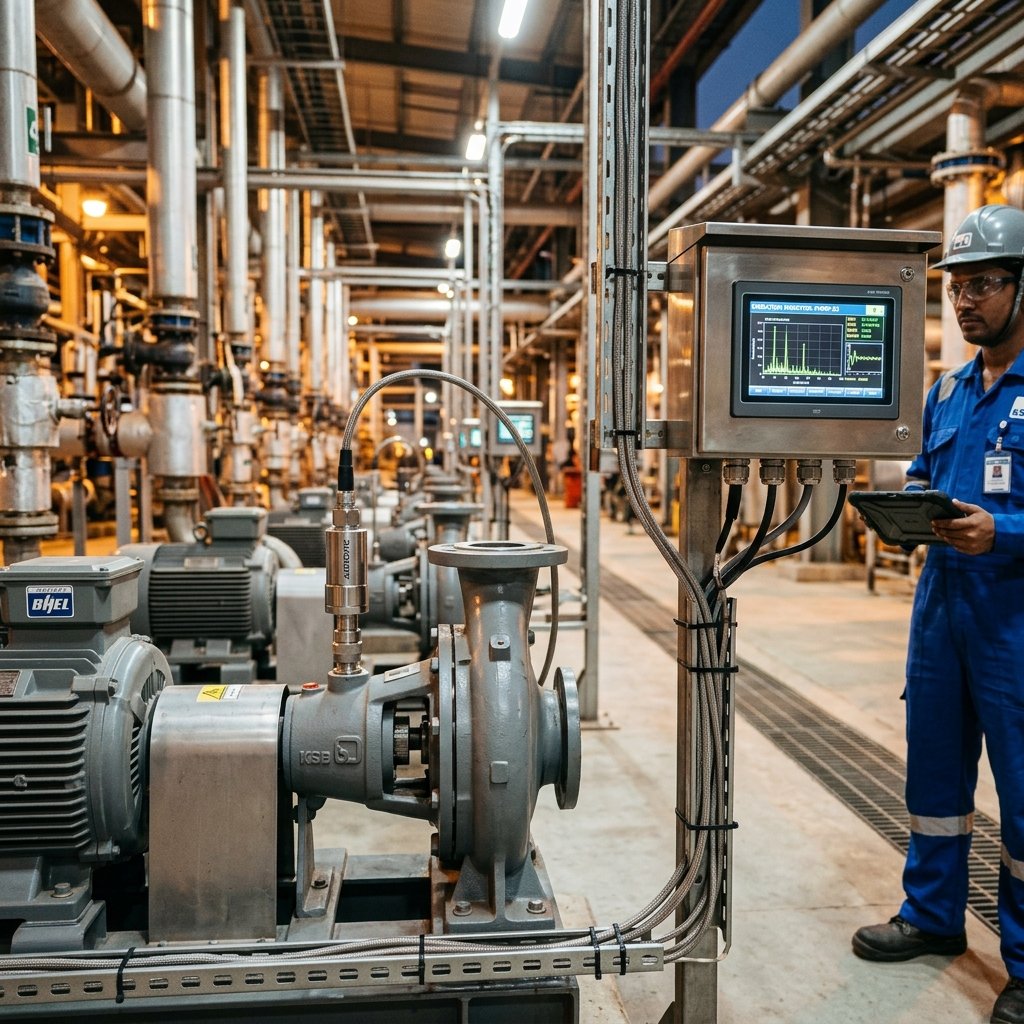
Figure: Real-world engineering implementation showing Maintenance risk matrix software calculating Expected Monetary Loss (EML) for critical aging production assets.
2. The Mathematical Model: Expected Monetary Loss (EML)
To evaluate the financial exposure of maintaining obsolete controllers, our automation panel utilizes the Expected Monetary Loss (EML) formula:
$$ ext{EML} = P( ext{Failure}) imes [ ext{Cost of Downtime} + ext{Cost of Emergency Procurement} + ext{Lost Contract Value}]$$
| Risk Parameter | Conservative Plant Scenario | Critical Continuous Production Scenario |
|---|---|---|
| Failure Probability Over 2 Years \(P(F)\) | 55% (Based on Weibull wear-out data) | 75% (Harsh thermal / vibration environment) |
| Emergency Recovery Downtime | 48 Hours (2 Days) | 120 Hours (5 Days) |
| Hourly Plant Downtime Cost | $6,500 / Hour | $28,000 / Hour |
| Emergency Sourcing & Contractor Rush Fees | $35,000 | $85,000 |
| Total Single-Event Catastrophe Cost | $347,000 | $3,445,000 |
| Expected Monetary Loss (EML) | $190,850 | $2,583,750 |
| Planned Proactive Modernization Cost | $55,000 (Payback: Instant) | $125,000 (Payback: Instant) |
3. The 4 Stages of the Obsolescence Death Spiral
- Stage 1 (Silent Degradation): Internal filter capacitors dry out; ripple voltage increases; backplane thermals rise. No outward alarms occur.
- Stage 2 (Nuisance Micro-Stops): Intermittent input glitches and serial timeout alarms appear. Operators reset the main breaker to "fix" the problem.
- Stage 3 (Catastrophic Failure): The power supply burns out or the processor enters unrecoverable hard-fault. The spare on the shelf fails to power up.
- Stage 4 (Emergency Reconstruction): Plant management pays massive premiums for grey-market parts; electricians frantically trace undocumented wiring; customer delivery deadlines are breached.
4. Eliminate the Inaction Risk with Compiled Successfully
Transform your operational vulnerability into a competitive advantage with Compiled Successfully:
- Explore our specialized Turnkey PLC Replacement Services.
- Upgrade your visualization systems via our SCADA Migration Services.
- Monitor line health in real time with our IIoT Edge Gateway Solutions.
5. Request an On-Site Risk-of-Inaction Assessment
Contact our industrial automation engineering team to quantify your plant's exact Expected Monetary Loss (EML) and design a phased, risk-free cutover plan.
Hotline: +91 9220922267 | WhatsApp: Schedule Risk Matrix Evaluation