1. The Illusion of Zero-Cost Legacy Control Systems
On balance sheets, industrial machinery depreciates over 7 to 10 years. Once a machine's capital cost has been fully amortized, executive management often perceives it as generating "pure profit" with zero ongoing equipment costs. This financial assumption proves disastrously false when applied to 20-year-old industrial control systems.
Operating obsolete PLCs creates a hidden iceberg of operational liabilities. While the visible line item for software licenses may be zero, the invisible costs beneath the surface drain plant profitability day after day.
The True Toll of Control Obsolescence
- Downtime Multiplier: Plants running controllers beyond their official End-of-Life (EOL) date experience 310% higher unscheduled downtime compared to facilities with modern control architectures.
- Broker Price Gouging: Discontinued PLC processor modules trade at an average of 400% to 700% above original list price on secondary grey-market broker networks.
- Micro-Stoppage Erosion: Unrecorded machine hesitations and communication latency across aging serial networks silently consume 45 to 90 minutes of daily production capacity.

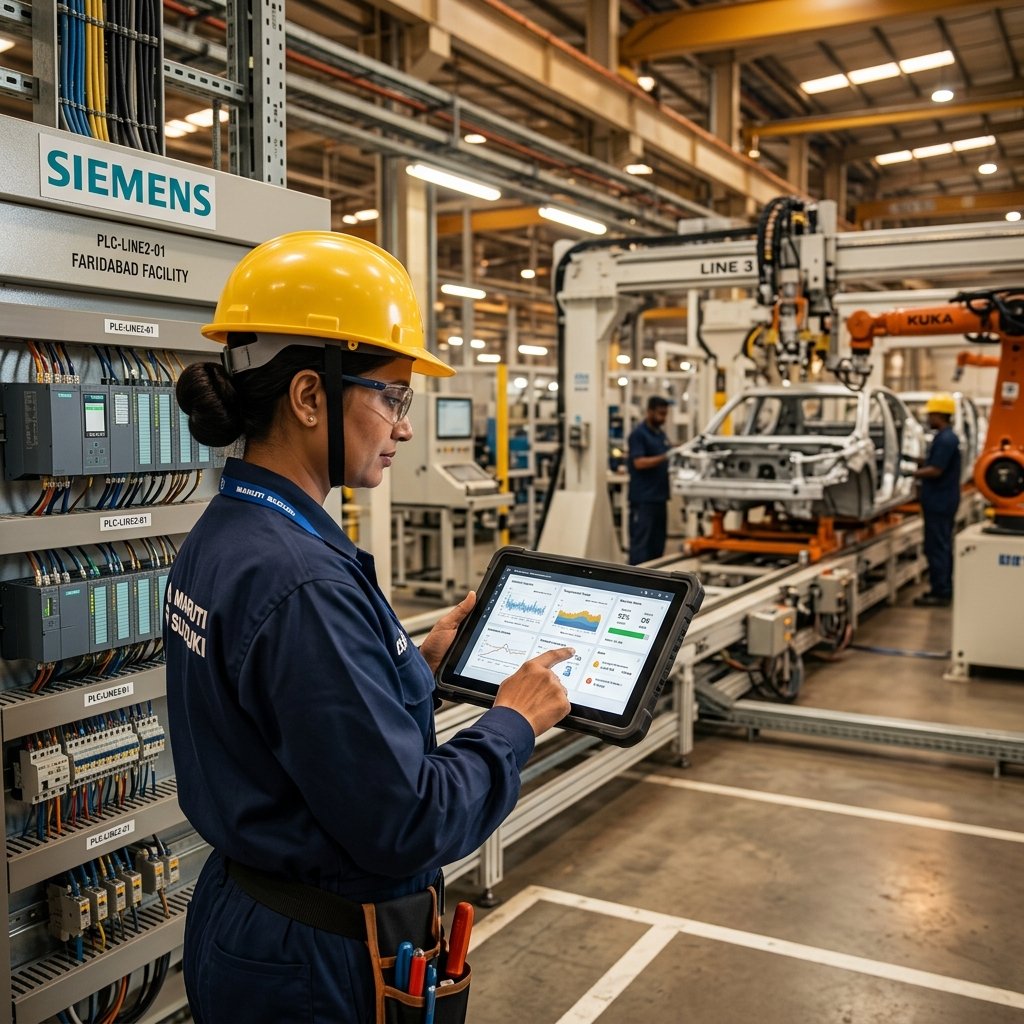
Figure: Real-world engineering implementation showing Predictive monitoring station deployed to track micro-stoppages and prevent catastrophic legacy controller crashes.
2. The 7 Hidden Costs Exposed
Cost 1: Grey-Market Spare Parts Inflation
When an OEM discontinues a controller series (such as Allen-Bradley PLC-5, SLC 500, or Siemens S5), authorized distributors cease stocking new replacements. Plants must resort to industrial surplus brokers, eBay, or unauthorized refurbishers. A module that originally cost $800 now commands $4,500—often with unverified operating histories, dried-out capacitors, and zero manufacturer warranty.
Cost 2: Astronomical Emergency Contractor Rates
As veteran engineers who understand 1980s statement list (AWL) and proprietary serial protocols retire, the remaining independent specialists charge premium emergency rates—often exceeding $250 to $450 per hour plus travel—just to troubleshoot an un-documented legacy system during a plant-down emergency.
Cost 3: Unrecorded Micro-Stoppages and Scan Lag
Legacy 16-bit PLCs operating at 8 MHz to 25 MHz suffer from slow scan cycles (25ms to 60ms). When complex math or multiple communications calls execute, the scan time stretches dynamically. This creates intermittent sensor misreads, missed registration marks, and brief micro-stops that operators dismiss as "routine glitches" but collectively reduce Overall Equipment Effectiveness (OEE) by 4% to 8%.
Cost 4: Inability to Integrate with Modern IIoT, SCADA & MES
Modern manufacturing demands real-time data integration with ERP systems (like SAP), cloud analytics, and mobile dashboards. Connecting an obsolete PLC that only speaks DH+ or 20mA current loop requires layers of fragile protocol converters, OPC DA bridge PCs, and custom middleware that constantly crash and require maintenance.
Cost 5: Cybersecurity Vulnerabilities and Insurance Surcharges
Legacy PLCs lack cryptographic certificate verification, encrypted communications, and password hashing. Under modern industrial cybersecurity audits (ISA/IEC 62443), an unpatched legacy controller connected to the plant network is classified as a critical vulnerability. Many industrial insurers are now adding substantial premium surcharges—or denying claim payouts entirely—if a cyber-incident originates from unsupported legacy hardware.
Cost 6: Excessive Electrical Energy Consumption
Legacy control systems rely on inefficient linear power supplies and lack intelligent coordination with modern variable frequency drives (VFDs). Modern PACs execute sub-millisecond motion profiles that eliminate peak mechanical inrush currents and reduce idle machine power consumption by 12% to 18%.
Cost 7: Catastrophic Catastrophic Memory Loss Risk
Old PLCs store active memory in volatile RAM supported by a small lithium battery. When the battery depletes while main power is turned off during annual maintenance or a holiday weekend, the entire program is wiped out. If the plant lacks a verified, up-to-date backup, reconstructing the ladder logic from scratch can halt production for weeks.
3. Summary Comparison: The Real Cost Over 5 Years
| Cost Category | Maintain Legacy Obsolete PLC (5 Years) | Execute Modern PAC Replacement (5 Years) |
|---|---|---|
| Hardware Acquisition | $0 initially, then $35,000 in inflated grey-market spares | $45,000 initial modern hardware investment |
| Unscheduled Downtime | $180,000 (Average 8 incidents over 5 years) | $12,000 (Virtually zero control-related trips) |
| Engineering & Support | $52,000 in emergency contractor troubleshooting | $15,000 routine in-house maintenance |
| Scrap & OEE Loss | $75,000 in preventable quality defects | $18,000 standard operational variance |
| Total Cost of Ownership | $342,000 | $90,000 (Net Savings: $252,000) |
4. Protect Your Bottom Line with Compiled Successfully
Stop paying the hidden tax of obsolete automation. Partner with Compiled Successfully to modernize your control infrastructure:
- Explore our specialized PLC Replacement Services.
- Upgrade your visualization systems via our SCADA Modernization Solutions.
- Monitor line efficiency in real time with our IIoT Analytics Platforms.
5. Request an Obsolescence Audit Today
Contact our engineering panel to quantify the hidden costs currently draining your facility's profitability.
Hotline: +91 9220922267 | WhatsApp: Schedule Technical Audit