1. The Great Divide: The Costly Chasm Between Shop Floor and Enterprise IT
In traditional manufacturing organizations, an enormous technological chasm separates two vital worlds: the Operational Technology (OT) world operating on the factory floor (PLCs, drives, robots, and sensors) and the Information Technology (IT) world operating in the corporate office (SAP, Oracle, Microsoft Dynamics ERP, and MES platforms).
Because legacy 1990s PLCs cannot communicate using enterprise protocols (JSON, REST APIs, SQL, MQTT), plants rely on manual human intervention: operators scribble production counts, scrap totals, and machine downtime onto paper clipboards. At the end of the shift, clerks manually type these numbers into the ERP. This creates massive data latency, transcription errors, inventory mismatches, and inaccurate financial reporting.
IT/OT Convergence Operational Metrics
- Inventory Accuracy: Direct machine-to-ERP integration improves raw material and work-in-progress (WIP) inventory accuracy to over 99.4%.
- Data Latency: Replaces 8-to-24-hour delayed batch paper entry with real-time sub-second production feedback.
- Administrative Labor Savings: Eliminating manual paperwork and clerical data entry saves up to 15 labor hours per production line per week.

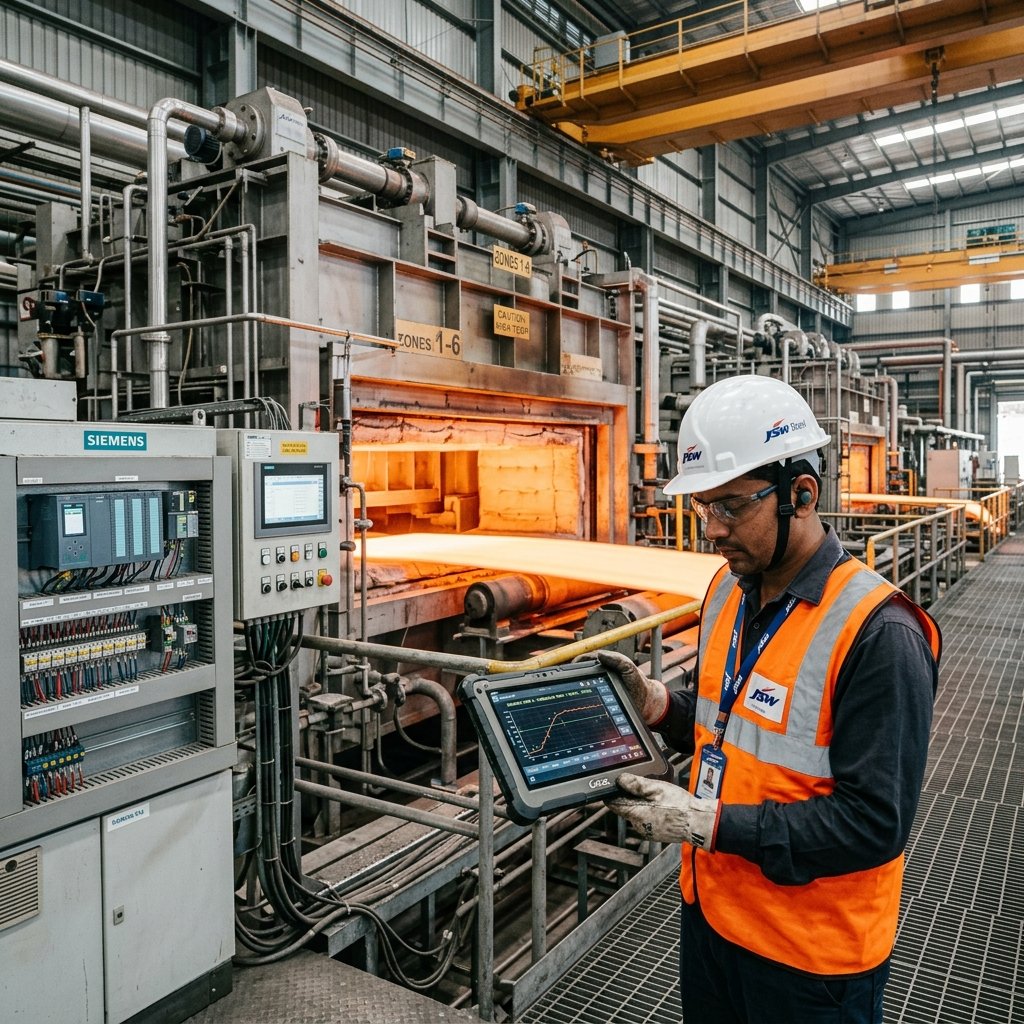
Figure: Real-world engineering implementation showing Direct transactional IT/OT bridge recording real-time production counts, material consumption, and scrap directly into SAP ERP.
2. How Modernized PLCs Interface Directly with Enterprise ERP
| Operational Function | Legacy Manual Clipboard Method | Modernized Connected PAC Architecture |
|---|---|---|
| Production Order Dispatch | Printed paper work order carried by supervisor to machine | ERP pushes digital work order directly to PAC recipe memory via REST / OPC UA |
| Material Consumption | Estimated batch deductions reconciled manually at month-end | PAC sends precise load-cell and flowmeter consumption directly to SAP inventory |
| Scrap & Defect Logging | Operators guess scrap counts or record totals on whiteboards | Automated optical reject sensors log defect reason codes directly into MES database |
| Equipment OEE Tracking | Subjective operator downtime logs prone to under-reporting | PAC timestamps micro-stops down to the second with automated fault classification |
3. Technical Integration Architecture: Direct SQL and REST APIs
Modern industrial controllers (such as Siemens S7-1500 or Rockwell CompactLogix with edge modules) can execute direct transactional database calls. Using native Function Blocks, the controller can execute parameterized SQL commands:
INSERT INTO Production_Log (Line_ID, Work_Order, Good_Parts, Scrap_Count, Timestamp) VALUES ('Line_3', 'WO-94821', 450, 4, CURRENT_TIMESTAMP);
This bypasses complex intermediate software layers, streaming validated plant floor data directly into enterprise databases with guaranteed cryptographic integrity.
4. Preserving OT Determinism and Cybersecurity Boundaries
A successful IT/OT convergence project must never compromise machine control safety. Compiled Successfully implements strict network isolation adhering to Purdue Model Level 3.5 DMZ architecture. Enterprise ERP queries terminate at a hardened industrial gateway, preventing corporate office malware or heavy IT database traffic from ever interfering with deterministic machine safety loops.
5. Compiled Successfully Turnkey IT/OT Solutions
Compiled Successfully bridges enterprise software with factory automation:
- Explore our specialized Turnkey PLC Replacement Services.
- Upgrade your production monitoring via our SCADA & MES Integration Services.
- Deploy seamless ERP-to-machine pipelines with our IIoT Edge Gateway Platforms.
6. Request an IT/OT Integration Consultation
Eliminate paper clipboards and connect your factory machinery directly to SAP or your corporate ERP. Contact Compiled Successfully today.
Hotline: +91 9220922267 | WhatsApp: Connect with an IT/OT Convergence Architect