1. The Siemens S7-300 / S7-400 Phase-Out: Why You Must Act Now
For more than two decades, the Siemens SIMATIC S7-300 and SIMATIC S7-400 series served as the gold standard of global factory automation. From high-speed packaging machinery to massive automotive body shops and power generation turbines, these controllers delivered unparalleled reliability. However, Siemens declared the official Phased-Out Product Milestone for the S7-300 and S7-400 series starting October 2023, initiating a 10-year spare parts phase during which prices escalate dramatically.
Operating plants can no longer purchase new S7-300 modules (such as CPU 315-2 DP, CPU 317-2 PN/DP, SM 321, SM 322, SM 331) at standard catalog pricing. Sourcing replacement parts now carries substantial surcharges, and critical firmware enhancements—especially regarding industrial cybersecurity—have ceased.
The Economic Impact of S7-300/400 Obsolescence
- Spare Parts Price Escalation: S7-300 components purchased through Siemens Spare Parts Service incur an annual price increase of 15% to 25%, doubling procurement costs every 3 to 4 years.
- Micro Memory Card (MMC) Vulnerability: The proprietary Siemens 6ES7 953 MMCs suffer write-cycle endurance exhaustion after 15+ years of continuous diagnostic logging, causing abrupt CPU crashes (STOP mode).
- Cybersecurity Exposure: Classic S7-300 controllers lack encrypted communications on ISO-on-TCP (Port 102), leaving them vulnerable to packet spoofing and unauthorized program changes under IEC 62443 standards.
- Communication Bottlenecks: Legacy PROFIBUS DP networks operate at 1.5 Mbps to 12 Mbps on copper RS-485 cables prone to electrical noise, compared to modern 100 Mbps / 1 Gbps PROFINET fiber networks.

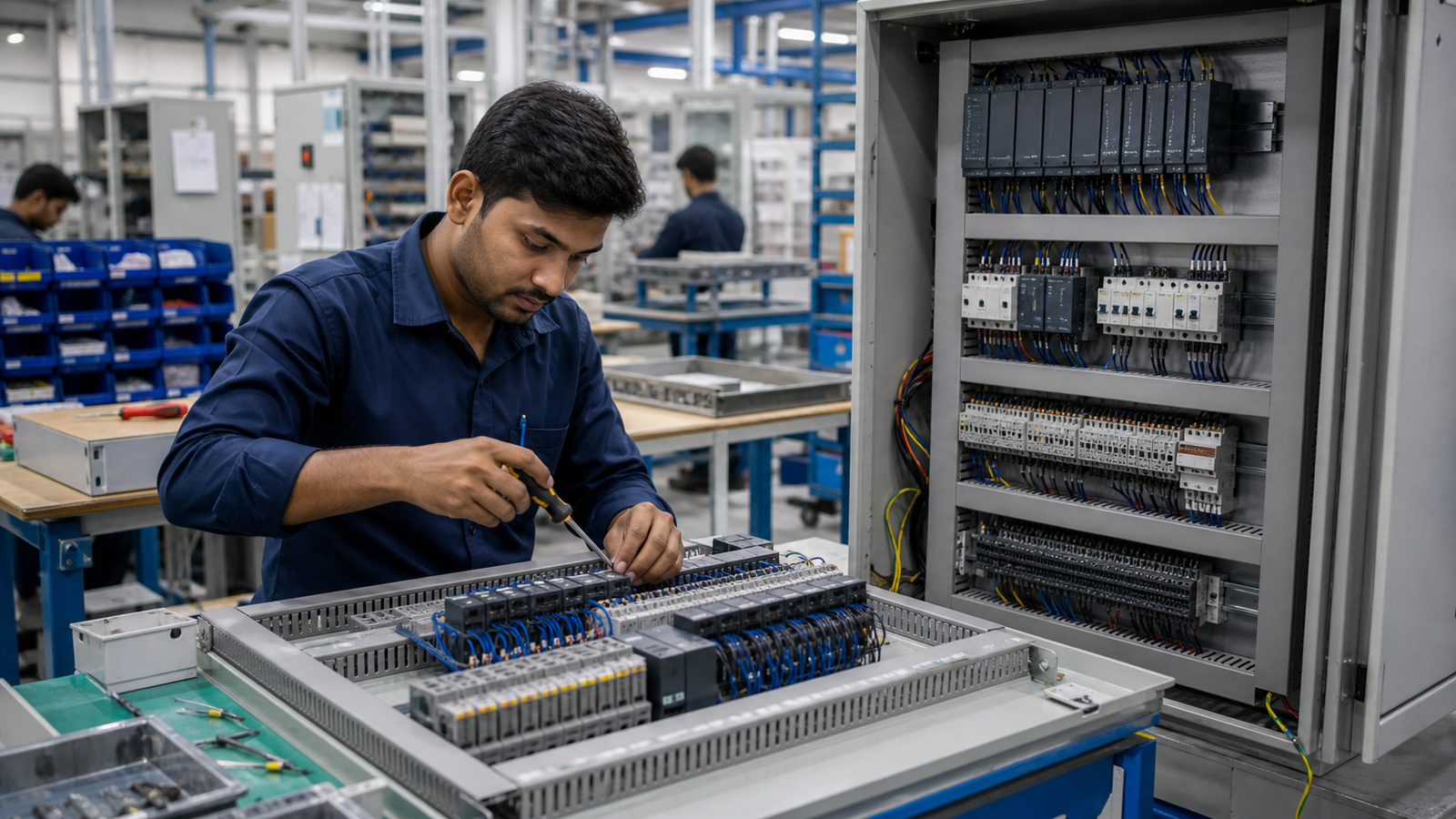
Figure: Real-world engineering implementation showing Modern SIMATIC S7-1500 control enclosure with high-speed PROFINET IO and ET 200MP distributed stations.
2. Technical Comparison: S7-300/400 vs S7-1500 / ET 200MP
Modernizing from Step 7 Classic v5.x to TIA Portal and S7-1500 delivers immense architectural advantages:
| System Dimension | Legacy SIMATIC S7-300 / S7-400 | Modern SIMATIC S7-1500 | Operational Benefit |
|---|---|---|---|
| Backplane Bus Speed | Parallel backplane bus (~10 Mbps) | Serial high-speed backplane (up to 400 Mbps) | Ultra-low I/O jitter; enables deterministic high-speed motion |
| Memory Architecture | Fixed Work Memory (typically 128 KB – 2 MB) | Up to 20 MB Work Memory + large SIMATIC SD Cards (up to 32 GB) | Store complete project documentation, symbol tables, and recipes on CPU |
| Fieldbus Architecture | PROFIBUS DP & MPI (coaxial copper cable) | PROFINET IO (IRT) with integrated dual-port switches | Resilient ring topology (MRP); eliminates termination resistor faults |
| Display & Diagnostics | LED indicators only (SF, BF, DC5V, FRCE, RUN, STOP) | Full-color graphical front display with plain-text diagnostics | Maintenance engineers read exact fault cause and module location without a PC |
| OPC UA Integration | Requires external CP 343-1 Lean card + PC server | Native embedded OPC UA Server with encryption | Direct, secure communication to SCADA, MES, SAP, and cloud analytics |
3. Seamless Wiring Conversion: Using S7-300 to S7-1500 Wiring Adapters
To prevent costly rewiring of 20-pin and 40-pin S7-300 front connectors, Siemens provides pre-assembled IO-Link and terminal adapter brackets. The existing front connectors click directly into modern ET 200MP / S7-1500 cards, reducing panel modification time by 75% and eliminating the need to re-verify hundreds of individual field loop circuits.
4. Step 7 V5.x to TIA Portal Migration Steps
Our automation engineering panel follows an established protocol for clean code migration:
- Consistency Check: In Step 7 Classic, compile the hardware configuration and execute a complete logic consistency check to verify block checksums.
- TIA Portal Ingestion: Use TIA Portal's "Migrate Project" tool to import hardware configuration, symbol tables, and logic blocks.
- Optimized Block Access: Convert standard DBs to "Optimized Block Access" to unlock S7-1500's high-speed memory execution and protect against out-of-bounds array access.
- Safety Logic Migration: S7 Distributed Safety logic is seamlessly converted to modern S7 Safety Advanced in TIA Portal.
5. Compiled Successfully Turnkey Siemens Solutions
Ensure a risk-free transition from S7-300/400 to S7-1500 with Compiled Successfully:
- Explore our specialized Siemens PLC Programming Services.
- Modernize your supervisory systems with our SCADA Migration Services.
- Connect your plant floor to enterprise dashboards via our IIoT Edge Gateway Solutions.
6. Schedule Your S7-300/400 Replacement Audit
Avoid emergency downtime caused by discontinued S7 hardware. Contact our automation experts for a comprehensive migration plan.
Hotline: +91 9220922267 | WhatsApp: Chat with Senior Siemens Engineer