Chat on WhatsApp
5-Tier Industrial Alarm Prioritization Cluster B — SCADA / PLC Alarm / Alert Management

Critical Machine Alarm System

Compiled Successfully Software Solution designs critical machine alarm systems adhering to ISA-18.2 standards. Categorize and prioritize plant alarms into 5 distinct tiers: Critical, High, Medium, Low, and Informational, ensuring life-safety and high-cost equipment trips receive immediate emergency response.
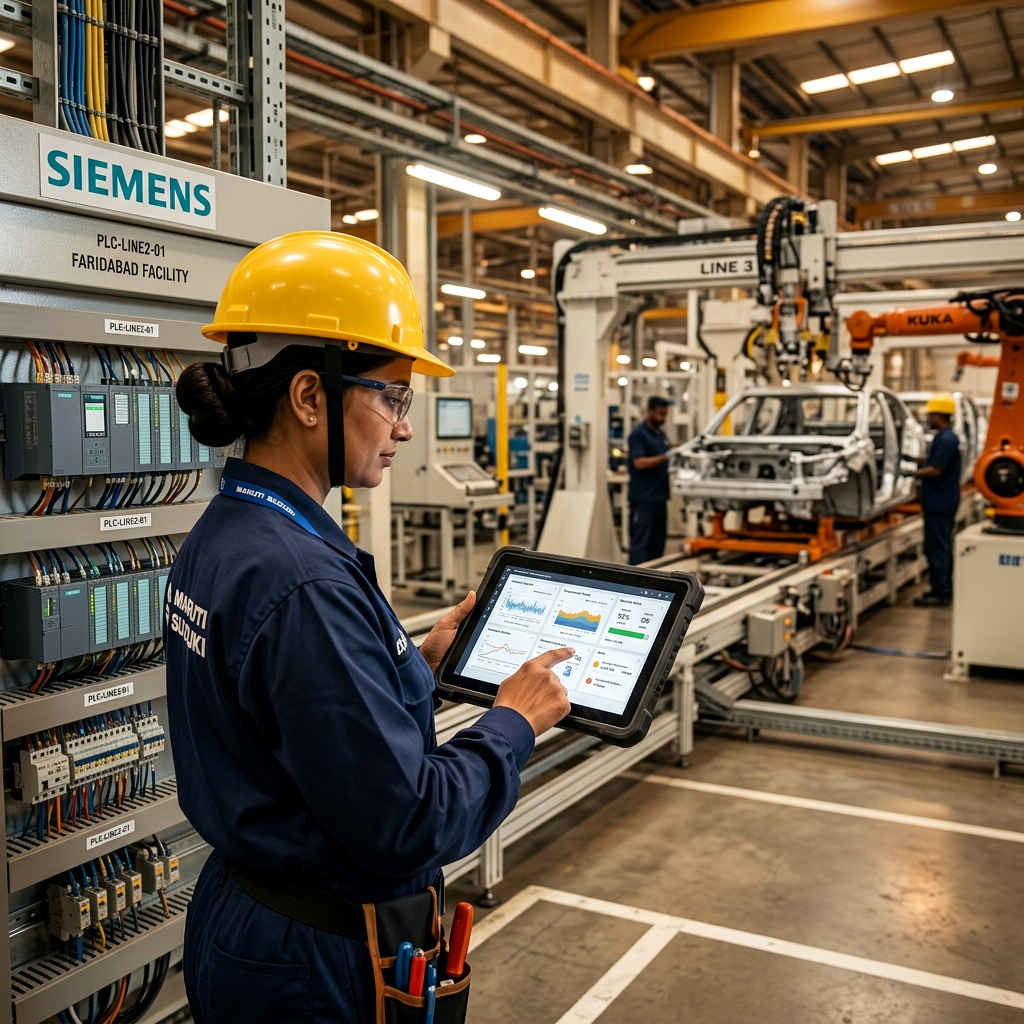
Zero Manual Intervention Multi-Brand PLC Support Sub-Second Latency
Cluster B — SCADA / PLC Alarm / Alert Management
LIVE OT STREAM
Critical Machine Alarm System 5-Tier Prioritization Hierarchy
< 1.2 ms
Handshake
100%
Zero Data Loss
Multi-PLC
Compatible
The Industrial Challenge

The Alarm Smokescreen: When Everything Is Urgent, Nothing Is Urgent

In many manufacturing plants, SCADA alarm consoles configure nearly every process deviation with the same loud red siren and urgent tone. When operators are subjected to hundreds of flashing alarms daily, they become desensitized. When a genuine life-safety or catastrophic machine trip occurs, it gets lost in the noise.

Why Traditional Methods Fail:

Unprioritized alarm systems overwhelm operators during plant upsets. A minor warning (e.g., 'Lube oil tank level 85%') competes equally with a catastrophic trip (e.g., 'Boiler high-pressure safety interlock breach'), leading to disastrous operational delays.

Critical Pain Points Solved

  • Alarm fatigue causing operators to silence all alarms reflexively without reading details
  • Inability to distinguish life-safety and catastrophic trips from minor informational notifications
  • No structured escalation protocol for alarms that threaten multi-crore equipment assets
  • Failure to meet industrial safety and insurance audit requirements for alarm rationalization

Technical Bottlenecks in Heterogeneous Automation

Without rigid five-tier classification, control rooms suffer from chronic alarm inflation. Standards like ISA-18.2 and EEMUA 191 mandate that Critical alarms represent no more than 5% of all plant alarms.

System Architecture

Rigorous 5-Tier Classification: Critical → High → Medium → Low → Informational

Our critical alarm platform enforces structured rationalization. We categorize every plant alarm based on potential consequence and required operator response time. Critical priority events bypass normal queues, trigger audible alarms, dispatch persistent mobile push notifications, and require managerial sign-off to close.
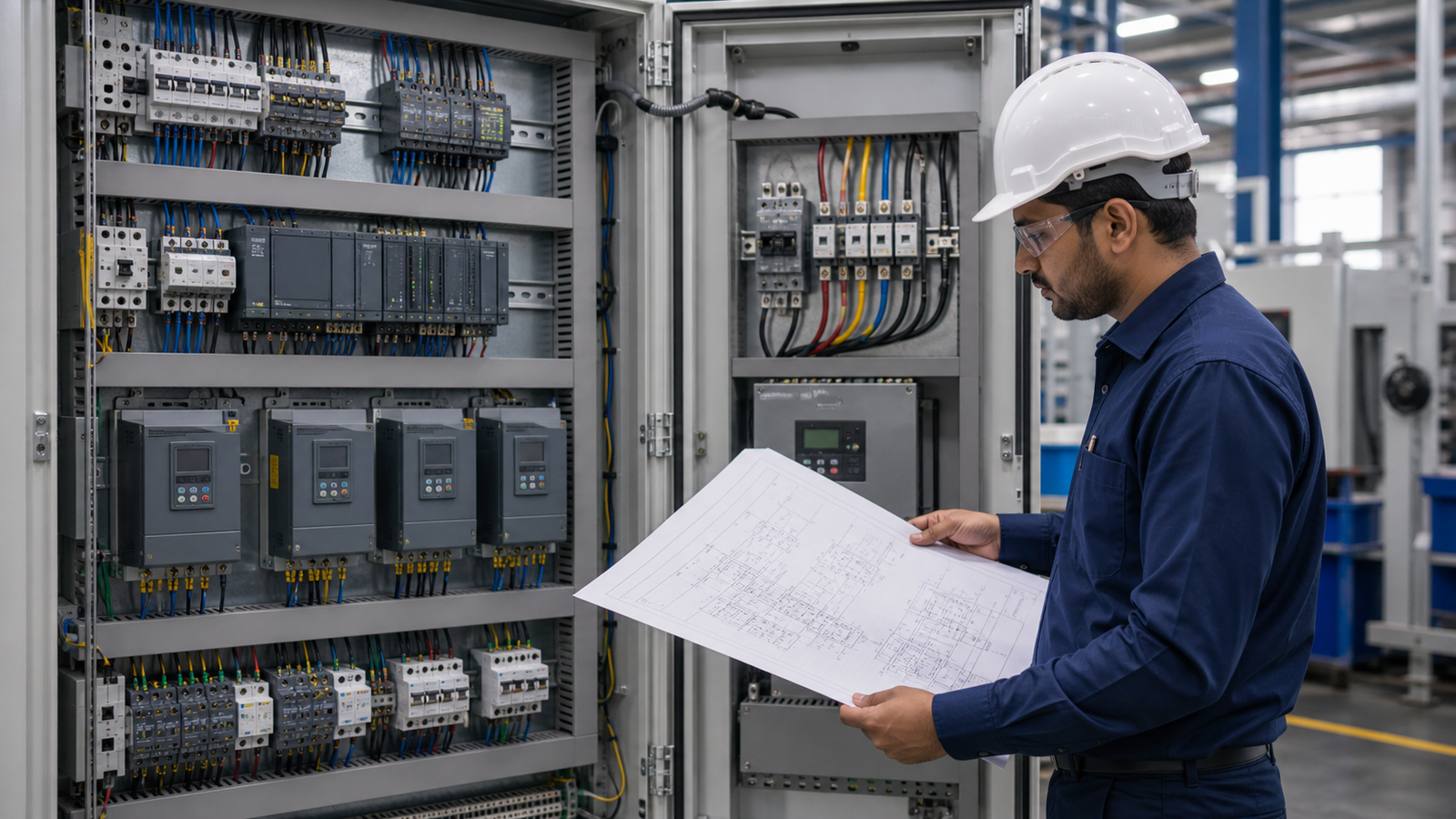
High-Priority Safety Interlock and Critical Machine Alarm Relay
Verified Field Deployment

Industrial shop-floor implementation with sub-second PLC telemetry & automated ERP synchronization.

Operational Blueprint

Eliminates alarm fatigue, ensures zero-delay response to critical emergencies, and establishes full compliance with international industrial safety standards.

Our specialized application connects directly to machine controllers and enterprise systems without invasive code modifications, establishing deterministic real-time communication across industrial fieldbuses.

  • Deterministic store-and-forward buffering prevents data dropouts.
  • Sub-second transaction confirmation directly logged to enterprise records.
  • Tested compatibility across leading PLC families and SCADA environments.
Data Flow & Layered Handshake Pipeline
Level 4: Enterprise Layer SAP S/4HANA • SAP ECC • Oracle • Microsoft Dynamics PP, MM, PM, QM, CO Modules
Production Orders • Recipe BAPIs • Bill of Materials • Maintenance Notifications • Yield Confirmation
Integration Engine (Our Application) Compiled Successfully ERP-PLC Integration Bridge Sub-Second Handshake

Transactional Buffer • RFC/BAPI Connectors • Protocol Translation (OPC UA, Profinet, Modbus, MQTT) • Store & Forward Caching

Bidirectional Verification Real-Time OEE Engine Multi-Channel Alarm Dispatch Automated SAP Backflush
Level 2: Supervisory Layer SCADA • Industrial HMI • Andon Boards • Mobile Gateways WinCC, Ignition, Wonderware
Live Machine Mimics • Active Alarm Banners • Operator Recipe Selection • Shift Telemetry
Level 1 & 0: Shop Floor Machinery Siemens • Rockwell Allen-Bradley • Mitsubishi • Schneider • Omron PLCs Fieldbuses • Drives • Sensors
Machine Stroke Pulses • Temperature Sensors • VFD Inverters • Power Meters • Vision Cameras
Continuous Closed-Loop Feedback Flow:

Critical Sensor Trip → Safety PLC Interlock → High-Priority Gateway Bypass → Emergency Mobile Push & Siren → Operator Acknowledgment → Root Cause Investigation Log

Eliminates alarm fatigue, ensures zero-delay response to critical emergencies, and establishes full compliance with international industrial safety standards.

Technical Capabilities

Core Features & Engineering Specifications

Built for high-speed industrial environments where downtime is measured in seconds.

Edge Connectivity

5-Tier Severity Matrix

Standardized classification: Critical (Red), High (Orange), Medium (Yellow), Low (Blue), Informational (Grey).

Deterministic Logic

Dedicated Critical Alert Channel

Critical tier alarms bypass normal message queues to guarantee sub-200ms delivery to all endpoints.

Real-Time Telemetry

Audible Sound Profiles

Distinct, non-confusing audio tones for each severity level, ensuring operators recognize priority by ear.

Zero Data Loss

Mandatory Justification Codes

Operators must select a validated root cause before a Critical alarm can be permanently marked as resolved.

Enterprise Security

Alarm Flood Suppression

Automatically engages state-based suppression during startup and shutdown to prevent nuisance alarm cascades.

Edge Connectivity

Compliance KPI Reporting

Generates ISA-18.2 compliance reports showing alarm distribution percentage across all 5 tiers.

Multi-Vendor Interoperability

Hardware & Protocol Support

Direct compatibility with leading global industrial automation and ERP ecosystems.

PLC Controllers

  • Siemens S7-1500 / S7-1200 / S7-400
  • Rockwell ControlLogix / CompactLogix
  • Mitsubishi MELSEC iQ-R / Q Series
  • Schneider Modicon M580 / M340
  • Omron Sysmac NJ / NX

Protocols & Buses

  • OPC UA (DA & AC)
  • Profinet IO / Industrial Ethernet
  • EtherNet/IP CIP Generic
  • Modbus TCP / RTU
  • MQTT Sparkplug B

Field Devices

  • Barcode & 2D DataMatrix Scanners
  • Digital Multi-Function Power Meters
  • Piezoelectric Accelerometers
  • Digital & Analog Transmitters
  • Variable Frequency Drives (VFDs)

ERP & SCADA

  • SAP S/4HANA (PP, PM, QM, MM, CO)
  • SAP ECC 6.0 RFC/BAPI Connectors
  • Ignition SCADA by Inductive Automation
  • Siemens WinCC Unified & TIA Portal
  • Wonderware System Platform
Operational Pipeline

Step-by-Step Execution Workflow

How data seamlessly flows from top-floor enterprise orders to shop-floor machine feedback.

1

Step 1

All plant alarm tags are audited and categorized into one of 5 severity tiers based on risk matrix.

Engineering Detail: Deterministic execution across industrial fieldbuses with sub-second handshake verification.
2

Step 2

When an event triggers, the system evaluates its severity tier immediately at the edge.

Engineering Detail: Deterministic execution across industrial fieldbuses with sub-second handshake verification.
3

Step 3

Low and Informational events are logged to the database without sounding control room sirens.

Engineering Detail: Deterministic execution across industrial fieldbuses with sub-second handshake verification.
4

Step 4

Critical alarms bypass normal polling queues, sounding high-urgency sirens and dispatching mobile push alerts.

Engineering Detail: Deterministic execution across industrial fieldbuses with sub-second handshake verification.
5

Step 5

Critical alarms require dual-operator acknowledgment and mandatory root-cause justification before clearing.

Engineering Detail: Deterministic execution across industrial fieldbuses with sub-second handshake verification.
Industry Applications

Tailored Solutions for Manufacturing Sectors

Proven operational results across discrete and continuous processing plants.

Chemical & Petrochemical

Application: High-pressure reactor and toxic gas detector emergency alerts in Ankleshwar.

Measurable Impact: Slashing changeover lead times by 35% and automating BOM verification.

Thermal Power & Boilers

Application: Boiler drum water low-level and flameout critical trips in Rajasthan.

Measurable Impact: 100% 21 CFR Part 11 compliant electronic batch records with zero transcription error.

Heavy Metal Stamping

Application: Press mechanical overload and hydraulic die-cushion trip alerts in Pune.

Measurable Impact: OEE uplift from 65% to 80% through instant micro-stoppage logging.

Pharmaceutical Bioreactors

Application: Contamination seal breach and over-temperature emergency alerts in Hyderabad.

Measurable Impact: Eliminating utility peak demand surcharges and optimizing furnace ramp rates.
Performance Benchmark

Traditional Methods vs. Compiled Successfully Solution

Why manual spreadsheets, point-to-point scripts, and isolated SCADA fall short.

Evaluation Dimension Traditional / Manual Methods Compiled Successfully Platform Operational Impact
Data Acquisition & Entry Manual paper logbooks or end-of-shift spreadsheet entry Sub-second automated PLC telemetry streaming & ERP posting Zero transcription error; 100% real-time data integrity
Downtime & Alert Response Local audible sirens in noisy shop floor; delays of 20-45 mins Instant SMS, WhatsApp, and mobile push notifications with root-cause context MTTR reduced by up to 50%; immediate intervention
Recipe & Parameter Download Manual operator entry on HMI keypad; high risk of human error Automated bidirectional recipe download from SAP order with 4-way handshake Eliminates wrong recipe setups and expensive scrap batches
Architectural Resilience Brittle point-to-point scripts without buffering; breaks on network drop Industrial-grade Store-and-Forward with TLS 1.3 encryption Zero telemetry loss even during enterprise network outages
Our Engineering Edge: Purpose-built bidirectional bridge between SAP ERP and multi-brand PLCs with sub-second determinism and automated mobile escalation.
Enterprise Grade

Industrial Compliance & OT Cyber-Security

Engineered strictly according to international standards for industrial automation: ISA-95 enterprise-control integration, ISA-18.2 alarm management lifecycle, 21 CFR Part 11 electronic batch records, and TLS 1.3 / mTLS outbound cryptographic security. Built-in Store-and-Forward guarantees zero telemetry loss during network drops.

Outbound-Only TLS 1.3 Encryption
Deterministic Store & Forward
ISA-95 Level 1 to 4 Data Model
ISA-18.2 Alarm Flood Suppression

Ready for a Factory Pilot?

Connect a single production line in under 3 weeks with zero line disruption.

Request Pilot Demo
Industrial Hubs Served

Nationwide Industrial Automation Deployment

Turnkey industrial automation and smart factory integration deployments across major industrial corridors in India.

Primary Industrial Corridors

  • Maharashtra (Pune, Chakan, Ranjangaon, Aurangabad)
  • Gujarat (Ahmedabad, Vadodara, Surat, Sanand)
  • Tamil Nadu (Chennai, Coimbatore, Sriperumbudur, Hosur)
  • Karnataka (Bengaluru, Peenya, Mysore, Belagavi)
  • NCR (Faridabad, Gurugram, Manesar, Noida, Delhi)

Emerging & Extended Industrial Zones

  • Telangana (Hyderabad, Pashamylaram)
  • Rajasthan (Bhiwadi, Neemrana, Jaipur)
  • Madhya Pradesh (Pithampur, Indore)
  • West Bengal (Kolkata, Durgapur, Haldia)
  • Andhra Pradesh (Visakhapatnam, Sri City)

Frequently Asked Questions

Technical and operational answers for plant managers and automation engineers.

Under ISA-18.2 standards, a Critical alarm is defined as an event where failure to act within a very short timeframe (e.g., < 2 minutes) could result in severe personnel injury, major environmental release, or catastrophic equipment damage.

According to international alarm management guidelines (ISA-18.2 and EEMUA 191), Critical alarms should represent no more than 1% to 5% of all configured alarms to ensure operators are never overwhelmed.

The engine features state-based alarm shelving and first-out logic. When an E-stop is pressed, secondary consequential alarms are temporarily suppressed, highlighting only the root initiating trip.

Yes. Operators can acknowledge and silence the audible siren to facilitate communication, but the visual alarm remains flashing on consoles until the physical fault condition is cleared at the PLC.

Yes. Millisecond-accurate metrics track Time-to-Acknowledge and Time-to-Clear for every Critical event, which are reviewed in monthly safety and operational reliability audits.
Free Demo Available

Ready to Improve Your Factory Alarm & Alert Management?

Discuss your PLC, SCADA, machine monitoring, IIoT or Industry 4.0 requirement with our industrial automation team. See how PLC events, SCADA alarms, machine downtime and industrial conditions can be monitored through web dashboards and mobile alerts.

Serving manufacturing plants across Delhi NCR, Haryana, Maharashtra, Gujarat, Tamil Nadu, and PAN India
Call Now WhatsApp Request Quote