
Compiled Successfully Software Solution builds high-precision cycle time deviation alert systems. Measure every machine cycle stroke in milliseconds, compare actual cycle time against configured engineering standards, and alert supervisors the moment machines slow down.
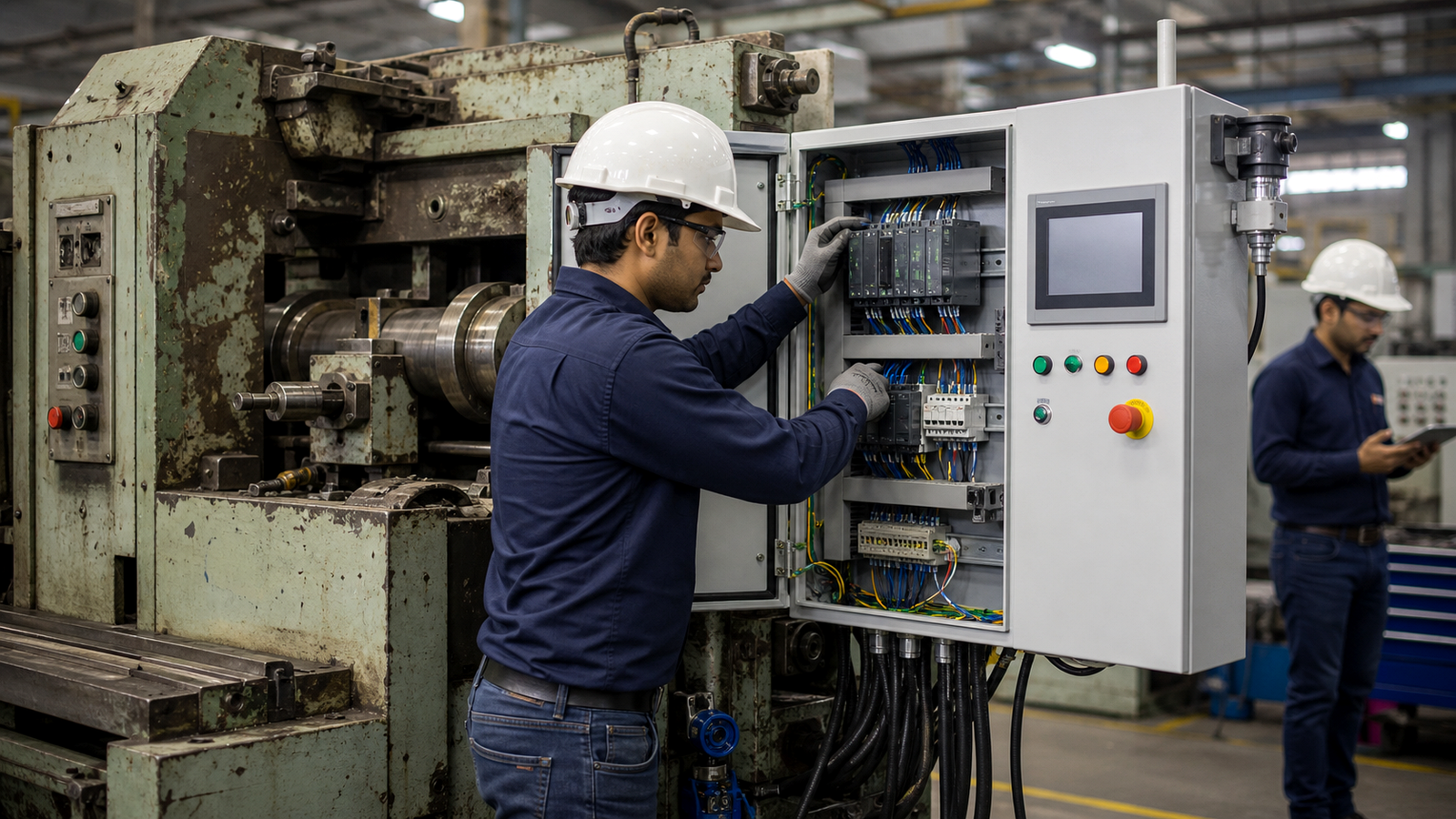
When a machine breaks down completely, a red light flashes and alarms sound. But when a machine designed to cycle in 10 seconds runs at 12 seconds, no sirens sound. To the casual observer, the machine looks perfectly healthy, yet it is silently losing 20% of its productive capacity every single minute.
Manual stopwatches and periodic operator checks cannot monitor thousands of cycles continuously. When operators intentionally dial down line speeds to avoid jams or compensate for dull tooling, lost output accumulates undetected across weeks of production.
Without automated millisecond measurement of cycle start and cycle complete signals directly from PLC registers, plants cannot detect micro-deviations before they snowball into major production deficits.
Our platform monitors machine cycle execution directly at the PLC layer. Every single part stroke, index, or press is measured with millisecond precision. The engine compares actual duration against the active product's standard cycle time, triggering instant visual warnings and mobile alerts when speed drops exceed configured tolerances.

Industrial shop-floor implementation with sub-second PLC telemetry & automated ERP synchronization.
Our specialized application connects directly to machine controllers and enterprise systems without invasive code modifications, establishing deterministic real-time communication across industrial fieldbuses.
Transactional Buffer • RFC/BAPI Connectors • Protocol Translation (OPC UA, Profinet, Modbus, MQTT) • Store & Forward Caching
Cycle Complete Trigger → High-Resolution PLC Timestamp → Edge Takt Comparison → Deviation Alert → Supervisor Notification & Operator Screen Warning
Exposes invisible speed loss, prevents unauthorized line slowdowns, detects mechanical degradation early, and restores lost factory capacity.
Built for high-speed industrial environments where downtime is measured in seconds.
Measures individual machine stroke durations with 10ms accuracy directly from hardware controller timers.
Automatically loads ideal cycle time standards based on the active part number or recipe downloaded from ERP.
Requires 3 consecutive slow cycles before alerting, preventing false alarms from single manual part loading delays.
Generates Gaussian distribution curves showing cycle time consistency and standard deviation across shifts.
Detects progressive cycle slowdowns caused by hydraulic seal wear, pneumatic cylinder leaks, or spindle binding.
Instantly flags when machine speed potentiometer or feed-rate override has been manually reduced below 100%.
Direct compatibility with leading global industrial automation and ERP ecosystems.
How data seamlessly flows from top-floor enterprise orders to shop-floor machine feedback.
The edge gateway captures cycle-start and cycle-complete transitions from the PLC with millisecond precision.
The system calculates the exact cycle duration for the completed part.
The actual duration is compared against the standard engineering cycle time configured for that SKU.
If cycle time exceeds upper control limits (e.g., > 10% slower) for 3 consecutive cycles, an alert triggers.
Visual speed dials turn yellow/red on factory TVs, and a notification is pushed to line supervisors.
Proven operational results across discrete and continuous processing plants.
Application: Detecting cycle elongation on cylinder head milling operations in Manesar.
Application: Monitoring mold open/close, injection, and cooling cycle times in Pune.
Application: Press strokes per minute (SPM) deviation tracking in Faridabad.
Application: Tracking index cycle times across multi-lane packaging machines in Baddi.
Why manual spreadsheets, point-to-point scripts, and isolated SCADA fall short.
| Evaluation Dimension | Traditional / Manual Methods | Compiled Successfully Platform | Operational Impact |
|---|---|---|---|
| Data Acquisition & Entry | Manual paper logbooks or end-of-shift spreadsheet entry | Sub-second automated PLC telemetry streaming & ERP posting | Zero transcription error; 100% real-time data integrity |
| Downtime & Alert Response | Local audible sirens in noisy shop floor; delays of 20-45 mins | Instant SMS, WhatsApp, and mobile push notifications with root-cause context | MTTR reduced by up to 50%; immediate intervention |
| Recipe & Parameter Download | Manual operator entry on HMI keypad; high risk of human error | Automated bidirectional recipe download from SAP order with 4-way handshake | Eliminates wrong recipe setups and expensive scrap batches |
| Architectural Resilience | Brittle point-to-point scripts without buffering; breaks on network drop | Industrial-grade Store-and-Forward with TLS 1.3 encryption | Zero telemetry loss even during enterprise network outages |
Engineered strictly according to international standards for industrial automation: ISA-95 enterprise-control integration, ISA-18.2 alarm management lifecycle, 21 CFR Part 11 electronic batch records, and TLS 1.3 / mTLS outbound cryptographic security. Built-in Store-and-Forward guarantees zero telemetry loss during network drops.
Connect a single production line in under 3 weeks with zero line disruption.
Request Pilot DemoTurnkey industrial automation and smart factory integration deployments across major industrial corridors in India.
Technical and operational answers for plant managers and automation engineers.
Discuss your PLC, SCADA, machine monitoring, IIoT or Industry 4.0 requirement with our industrial automation team. See how PLC events, SCADA alarms, machine downtime and industrial conditions can be monitored through web dashboards and mobile alerts.
