
Compiled Successfully Software Solution provides a robust integration layer connecting SAP ERP production planning with shop-floor PLCs. Streamline process order delivery directly into machine controllers and synchronize completed quantities, line states, and batch records back to enterprise systems automatically.
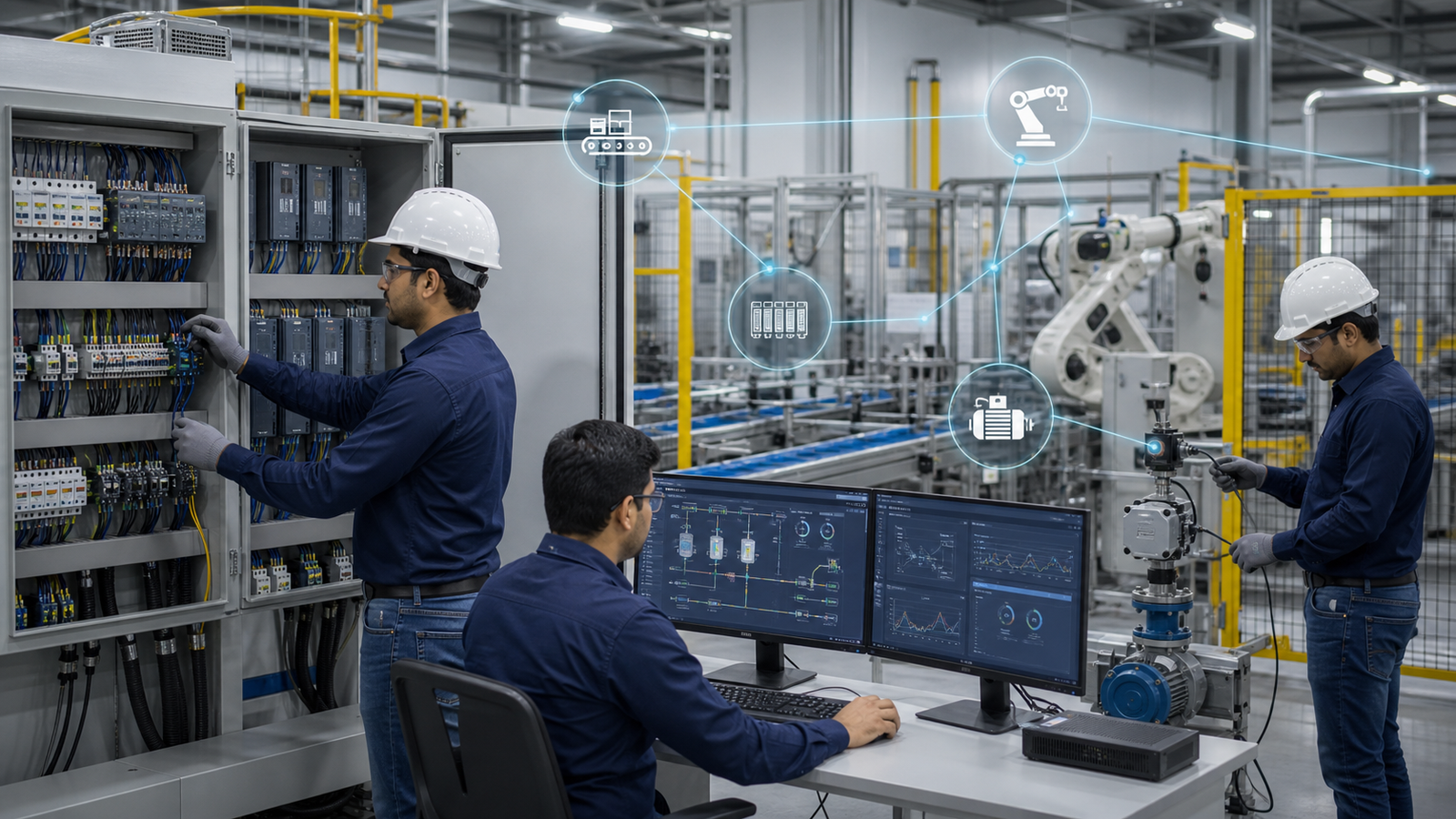
In many manufacturing plants across India, enterprise ERP planning and shop-floor PLC operations remain completely separated. Production schedules released in SAP must be manually printed or transcribed onto operator paper logs, while machine execution data is re-entered hours or days later.
Relying on manual data entry between ERP systems and machine HMIs introduces human typing errors, recipe discrepancies, delayed job tracking, and zero real-time visibility into whether a production order is running, stalled, or completed on schedule.
Discrete and process manufacturing plants face significant bottlenecks when order parameters cannot reach machine controllers automatically. Without bi-directional integration, quality parameters must be entered manually at every changeover, increasing cycle times and risking out-of-specification production.
Our ERP-to-PLC integration application acts as a secure, high-availability software bridge. It receives released production orders from SAP through the available integration interface, translates order parameters into PLC-compatible registers, and continuously captures machine status and production confirmations to update SAP in closed-loop operation.
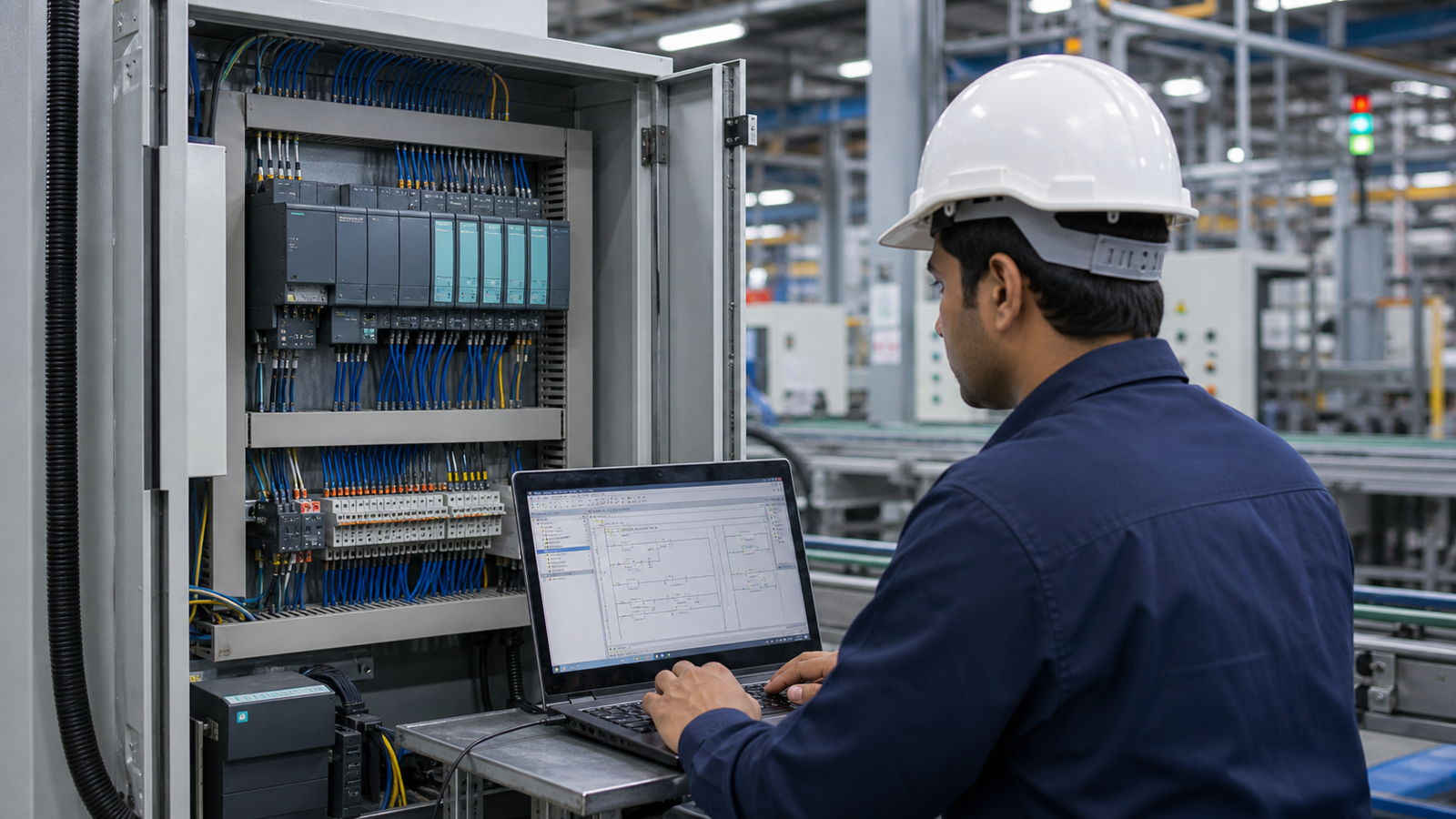
Industrial shop-floor implementation with sub-second PLC telemetry & automated ERP synchronization.
Our specialized application connects directly to machine controllers and enterprise systems without invasive code modifications, establishing deterministic real-time communication across industrial fieldbuses.
Transactional Buffer • RFC/BAPI Connectors • Protocol Translation (OPC UA, Profinet, Modbus, MQTT) • Store & Forward Caching
Machine Sensors → PLC Run/Piece Count Tags → Integration Middleware → Validation & Aggregation → SAP Order Confirmation & Status Update
Eliminates paper production sheets, enforces automated recipe verification at the controller level, and provides true closed-loop visibility between enterprise planning and physical machines.
Built for high-speed industrial environments where downtime is measured in seconds.
Map complex SAP process order fields directly to PLC data blocks, holding registers, or structured tags with built-in datatype conversion.
Local transactional database buffers all production telemetry during network interruptions, guaranteeing zero data loss when reconnecting to SAP.
Native communication drivers for Siemens S7, Rockwell ControlLogix, Mitsubishi MELSEC, Schneider Modicon, and Omron controllers.
Validates machine readiness and interlock states before writing order setpoints, preventing machine start under unsafe conditions.
Comprehensive audit trails recording every read, write, acknowledgment, and error code with millisecond-precision timestamps.
Browser-based operator dashboard for monitoring active SAP orders, controller handshake statuses, and integration health.
Direct compatibility with leading global industrial automation and ERP ecosystems.
How data seamlessly flows from top-floor enterprise orders to shop-floor machine feedback.
Production orders released in SAP ERP are queried or received by the integration application via the customer's preferred SAP interface mechanism.
The integration middleware validates order integrity, recipe limits, and machine availability before scheduling the job.
Validated production parameters, target quantities, and setpoints are written directly into controller memory blocks (PLC DBs or registers).
The machine executes the production run while the PLC increments real-time good piece, scrap, and machine run-time counters.
On batch completion or phase transitions, the integration layer formats confirmation data and synchronizes production status back into SAP.
Proven operational results across discrete and continuous processing plants.
Application: Automated delivery of assembly BOMs and part numbers to robot welding cells and torque assembly stations.
Application: Enforcing batch code and expiry date recipes directly to blister packaging PLCs with tamper-proof audit trails.
Application: Real-time stroke counting and coil consumption synchronizing with SAP inventory in Faridabad and Pune plants.
Application: Automated recipe setpoint downloading into continuous blending and pasteurization PLC systems.
Why manual spreadsheets, point-to-point scripts, and isolated SCADA fall short.
| Evaluation Dimension | Traditional / Manual Methods | Compiled Successfully Platform | Operational Impact |
|---|---|---|---|
| Data Acquisition & Entry | Manual paper logbooks or end-of-shift spreadsheet entry | Sub-second automated PLC telemetry streaming & ERP posting | Zero transcription error; 100% real-time data integrity |
| Downtime & Alert Response | Local audible sirens in noisy shop floor; delays of 20-45 mins | Instant SMS, WhatsApp, and mobile push notifications with root-cause context | MTTR reduced by up to 50%; immediate intervention |
| Recipe & Parameter Download | Manual operator entry on HMI keypad; high risk of human error | Automated bidirectional recipe download from SAP order with 4-way handshake | Eliminates wrong recipe setups and expensive scrap batches |
| Architectural Resilience | Brittle point-to-point scripts without buffering; breaks on network drop | Industrial-grade Store-and-Forward with TLS 1.3 encryption | Zero telemetry loss even during enterprise network outages |
Engineered strictly according to international standards for industrial automation: ISA-95 enterprise-control integration, ISA-18.2 alarm management lifecycle, 21 CFR Part 11 electronic batch records, and TLS 1.3 / mTLS outbound cryptographic security. Built-in Store-and-Forward guarantees zero telemetry loss during network drops.
Connect a single production line in under 3 weeks with zero line disruption.
Request Pilot DemoTurnkey industrial automation and smart factory integration deployments across major industrial corridors in India.
Technical and operational answers for plant managers and automation engineers.
Discuss your PLC, SCADA, machine monitoring, IIoT or Industry 4.0 requirement with our industrial automation team. See how PLC events, SCADA alarms, machine downtime and industrial conditions can be monitored through web dashboards and mobile alerts.
