
Choosing between retrofit and replacement depends on mechanical condition, control obsolescence, output goals, downtime risk, and budget reality.
Plants often default to replacement conversations before evaluating whether the machine frame, process, and production logic can be modernized more economically. A retrofit can deliver strong returns when the core machine is still viable but controls, drives, safety, wiring, or operator interfaces are outdated. A replacement is often better when the mechanical platform itself has become the main bottleneck.
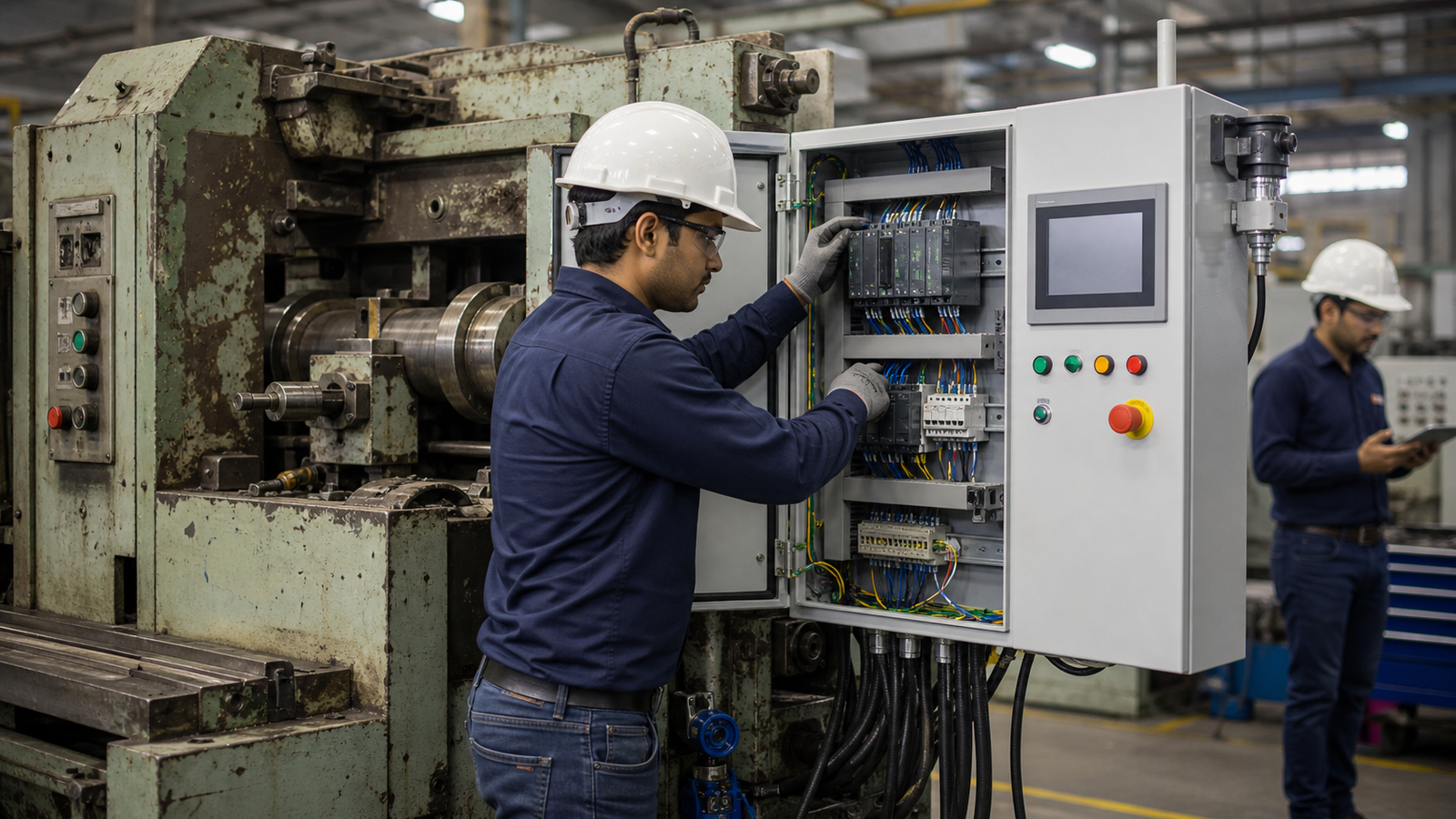
Plants often default to replacement conversations before evaluating whether the machine frame, process, and production logic can be modernized more economically. A retrofit can deliver strong returns when the core machine is still viable but controls, drives, safety, wiring, or operator interfaces are outdated. A replacement is often better when the mechanical platform itself has become the main bottleneck.
The highest-performing projects align automation decisions with uptime, quality, safety, reporting, and maintenance outcomes instead of treating technology as an isolated purchase.
We focus on practical execution steps that can be implemented around existing machines, controls, and plant teams.
A short discovery review usually saves time, avoids scope gaps, and improves the odds of a clean implementation.
The client was unsure whether to replace an aging machine entirely or modernize the controls and operator systems to recover performance faster.
Solution: We reviewed control obsolescence, mechanical condition, supportability, and downtime economics to compare both paths before investment.
Discuss retrofit versus replacement decision support with our team to map requirements, identify quick wins, and plan a practical rollout for your plant.
