
Old PLC systems can often be modernized in phases if the plant understands the risk points, spare situation, and migration path clearly.
Full replacement is not always the smartest first move for aging PLC systems. Many plants can stabilize risk by improving backups, modernizing HMIs, isolating vulnerable components, replacing selected IO or networks, and sequencing migration during planned shutdowns. The key is to separate what is urgent from what can be phased safely.
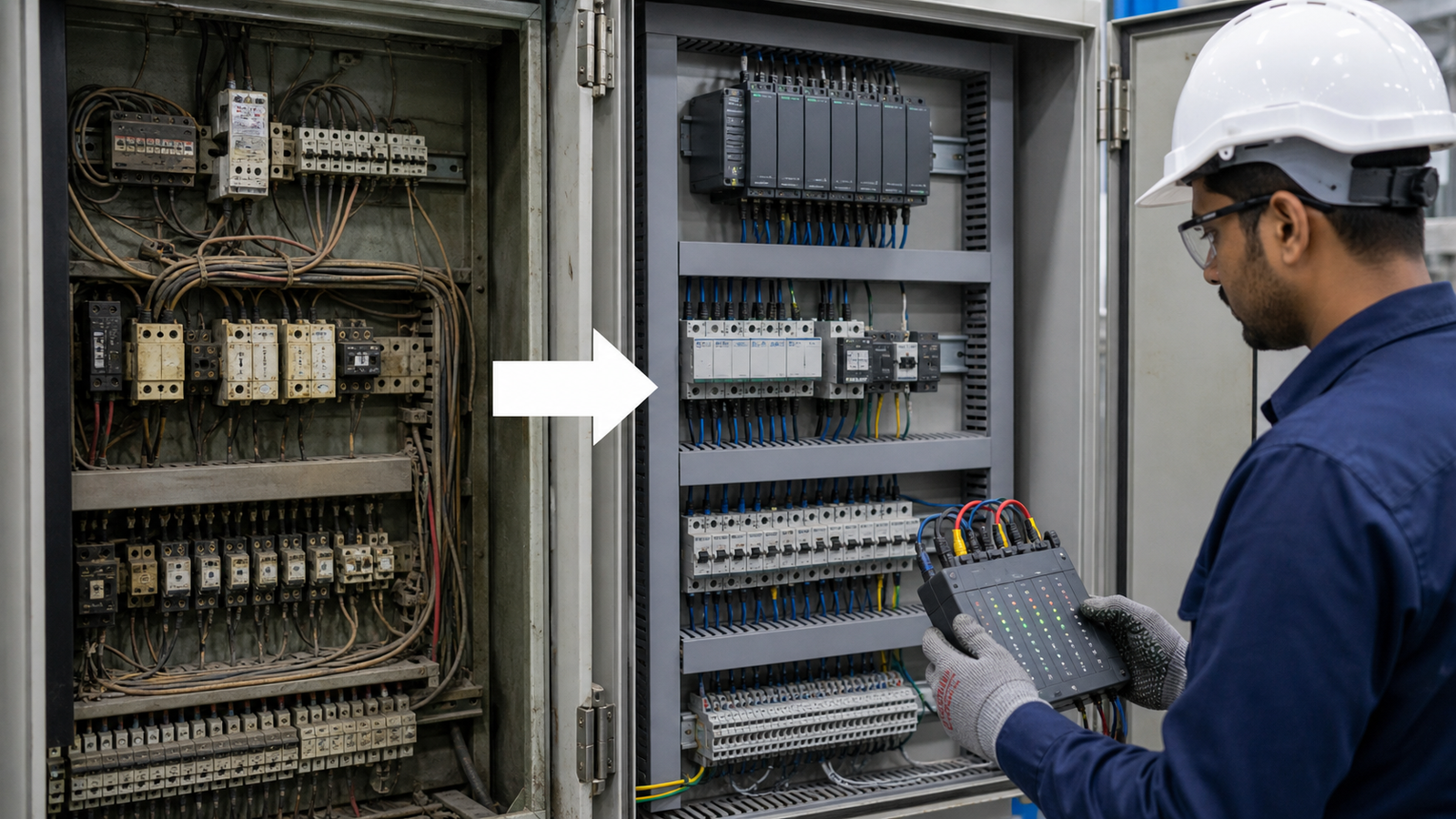
Full replacement is not always the smartest first move for aging PLC systems. Many plants can stabilize risk by improving backups, modernizing HMIs, isolating vulnerable components, replacing selected IO or networks, and sequencing migration during planned shutdowns. The key is to separate what is urgent from what can be phased safely.
The highest-performing projects align automation decisions with uptime, quality, safety, reporting, and maintenance outcomes instead of treating technology as an isolated purchase.
We focus on practical execution steps that can be implemented around existing machines, controls, and plant teams.
A short discovery review usually saves time, avoids scope gaps, and improves the odds of a clean implementation.
The line relied on an aging PLC platform with support risk, limited documentation, and increasing downtime pressure, but could not tolerate a full immediate replacement.
Solution: We defined a phased modernization plan that prioritized backups, operator interface improvement, panel cleanup, and future migration readiness.
Discuss legacy PLC modernization planning with our team to map requirements, identify quick wins, and plan a practical rollout for your plant.
